Asset Vantage

Asset Vantage Systems Private Limited : Email: info@assetvantage

Asset Swap Accounting: Understanding the Basics

Image with bold white and yellow text reading Asset Swap Accounting: Understanding the Basics on a black background. Focuses on the key concepts of asset swap accounting and its basic principles.

Read Time2 MinsAsset swap accounting is a vital concept in the world of finance and investment. It refers to a financial transaction where an investor swaps the cash flows of one asset, such as a bond or loan, for the cash flows of another asset, typically a floating rate instrument. This technique allows investors to […]

Read Time4 Mins

Asset swap accounting is a vital concept in the world of finance and investment. It refers to a financial transaction where an investor swaps the cash flows of one asset, such as a bond or loan, for the cash flows of another asset, typically a floating rate instrument. This technique allows investors to manage their risk exposure, optimize their portfolios, and enhance their returns. 

We will explore the basics of asset swap accounting and its significance in the financial landscape. 

1.Purpose of Asset Swap Accounting:

Asset swap accounting involves the exchange of cash flows between two different financial instruments. The purpose is to modify the characteristics of an asset to better suit the investor’s objectives. It allows investors to switch between fixed and floating interest rate instruments, change credit risk exposure, or adjust the maturity of their investments. 

 2.Key Components of Asset Swap Accounting:

Asset swap accounting involves several key components, including the fixed-rate bond, the floating-rate instrument, the swap contract, and the cash flows associated with each. The fixed-rate bond is typically the initial investment, while the floating-rate instrument represents the desired exposure. The swap contract facilitates the exchange of cash flows between the two assets. 

 3.Cash Flow Mechanics:

In asset swap accounting, cash flows are exchanged periodically between the fixed-rate bond and the floating-rate instrument. The fixed-rate bond pays a fixed interest rate, while the floating-rate instrument pays a variable interest rate based on a reference rate, such as LIBOR. The swap contract ensures that the investor receives the desired cash flows, effectively swapping the fixed-rate bond’s cash flows for the floating-rate instrument’s cash flows. 

 4.Risk Management and Optimization:

Asset swap accounting offers investors a range of benefits in terms of risk management and portfolio optimization. By swapping the cash flows of different assets, investors can modify their risk exposure and adjust their portfolio composition. For example, they can convert fixed-rate bonds into floating-rate instruments to mitigate interest rate risk or enhance their returns in a changing rate environment. 

 5.Application in Financial Institutions:

It is widely used in financial institutions, including banks, asset management firms, and hedge funds. These institutions employ asset swap strategies to manage their portfolios, enhance returns, and mitigate risk. The ability to customize cash flows and exposure through asset swaps provides greater flexibility in their investment decisions. 

 6.Significance for Wealth Management:

It plays a crucial role in wealth management, particularly for high-net-worth individuals and family offices. By utilizing asset swap strategies, wealth managers can tailor investment portfolios to meet their clients’ specific needs and preferences. This approach allows for customized risk management, income generation, and diversification strategies, ultimately supporting long-term wealth preservation and growth. 

 In conclusion, asset swap accounting is a powerful tool in the world of finance and investment. By understanding its basics, investors can leverage this technique to optimize their portfolios, manage risk exposure, and enhance returns. Whether employed by financial institutions or utilized in wealth management, It offers valuable opportunities for investors to customize their investments and achieve their financial goals. 

[maxbutton id=”6″ text=”Start AV Trial” ]

Leave a Reply

Your email address will not be published. Required fields are marked *

A model of a house and a high-rise building with a magnifying glass and coins, symbolizing the differences between family offices and hedge funds, emphasizing control, values, and long-term impact

Family Office vs Hedge Fund: Beyond Returns through Control, Values, and Generational Impact

Hedge fund or family office? Explore investment style, regulation, and governance to see which aligns with family wealth goals. Family Office vs Hedge Fund: Why This Comparison Matters A hedge…
An elderly couple shaking hands with a family office advisor, showcasing a professional business interaction. The advisor in a suit is discussing financial planning with the couple in a modern office setting

What Family Office Advisors Do That Most Don’t Know

Uncover the hidden roles of family office advisors. Learn how they contribute beyond expectations. Understanding Family Office Advisors What is a family office advisor? Generational wealth is rarely lost to…
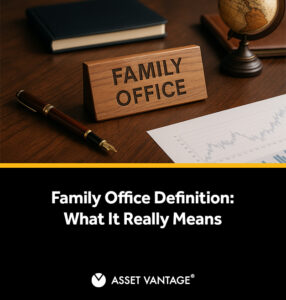
Image of a wooden 'FAMILY OFFICE' nameplate on a desk with a pen, globe, and a financial chart. Highlights the definition and importance of family offices in managing wealth and generational impact.

Understanding Family Office – Definition, Purpose, and Benefits Explained

A family office is a central platform for managing family wealth and governance. It coordinates financial affairs, investment oversight, and selected personal services.
A family investment group symbolized by three generations stacking wooden blocks with wealth, growth, and finance icons, representing structured investments, governance, and legacy planning.

Family Investment Group: Structuring Wealth, Investments, and Legacy for Generational Growth

Explore how family investment groups, offices, and entities manage assets, businesses, and governance with professional, legal, and tax guidance. Foundations of a Family Investment Group What Is a Family Investment…
Creative illustration of family office advisory services showing a businessman riding a dollar bill with strategy charts, symbolizing how financial strategies enhance wealth, investments, and legacy.

How Family Office Advisory Services Enhance Financial Strategies

Explore how family office advisory services can enhance your financial strategies, offering structured solutions to meet your wealth goals effectively. Understanding the Landscape of Family Office Advisory What Are Family…

Why Family Office Private Equity Investments are Gaining Traction in 2025

Discover the reasons behind the rising popularity of family office private equity in 2025. Family Office Private Equity Investments: The Rise in 2025 Private equity is no longer the exclusive…
A model of a house and a high-rise building with a magnifying glass and coins, symbolizing the differences between family offices and hedge funds, emphasizing control, values, and long-term impact

Family Office vs Hedge Fund: Beyond Returns through Control, Values, and Generational Impact

Hedge fund or family office? Explore investment style, regulation, and governance to see which aligns with family wealth goals. Family Office vs Hedge Fund: Why This Comparison Matters A hedge…
An elderly couple shaking hands with a family office advisor, showcasing a professional business interaction. The advisor in a suit is discussing financial planning with the couple in a modern office setting

What Family Office Advisors Do That Most Don’t Know

Uncover the hidden roles of family office advisors. Learn how they contribute beyond expectations. Understanding Family Office Advisors What is a family office advisor? Generational wealth is rarely lost to…
Image of a wooden 'FAMILY OFFICE' nameplate on a desk with a pen, globe, and a financial chart. Highlights the definition and importance of family offices in managing wealth and generational impact.

Understanding Family Office – Definition, Purpose, and Benefits Explained

A family office is a central platform for managing family wealth and governance. It coordinates financial affairs, investment oversight, and selected personal services.
A family investment group symbolized by three generations stacking wooden blocks with wealth, growth, and finance icons, representing structured investments, governance, and legacy planning.

Family Investment Group: Structuring Wealth, Investments, and Legacy for Generational Growth

Explore how family investment groups, offices, and entities manage assets, businesses, and governance with professional, legal, and tax guidance. Foundations of a Family Investment Group What Is a Family Investment…
Creative illustration of family office advisory services showing a businessman riding a dollar bill with strategy charts, symbolizing how financial strategies enhance wealth, investments, and legacy.

How Family Office Advisory Services Enhance Financial Strategies

Explore how family office advisory services can enhance your financial strategies, offering structured solutions to meet your wealth goals effectively. Understanding the Landscape of Family Office Advisory What Are Family…

Why Family Office Private Equity Investments are Gaining Traction in 2025

Discover the reasons behind the rising popularity of family office private equity in 2025. Family Office Private Equity Investments: The Rise in 2025 Private equity is no longer the exclusive…