Read Time4 Mins
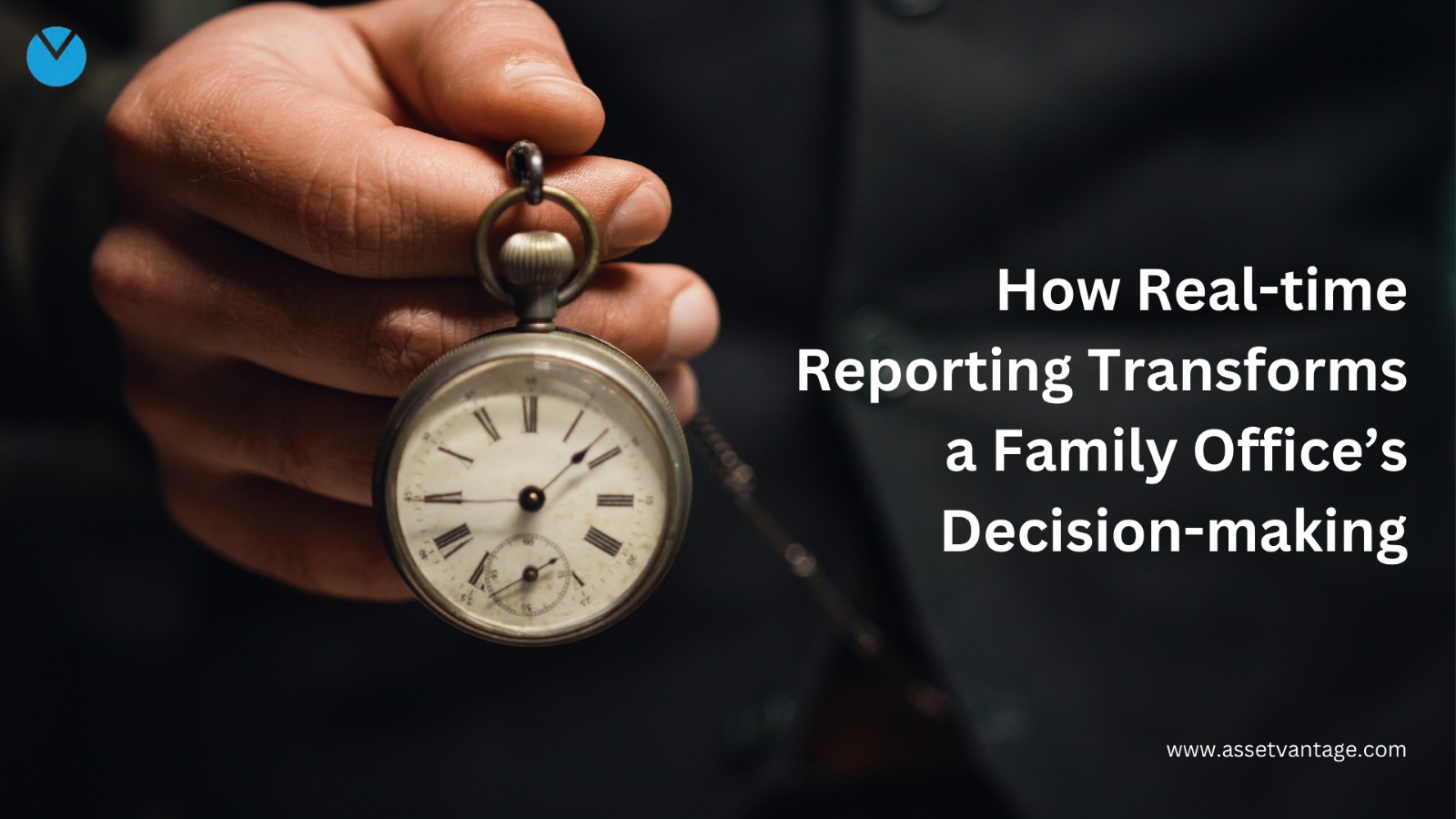
Family offices, tasked with managing complex portfolios and investments, face a daunting challenge: fragmented data across disparate systems and outdated reporting processes. A recent Family Wealth Report study revealed that family offices spend up to 40% of their working hours managing manual accounting and reporting tasks—time that could be used for strategic decision-making. As the financial landscape grows more intricate, real-time reporting from a single source of truth has become the cornerstone of modern family office operations, enabling faster decisions, improved risk management, and greater transparency.
Instead of asking, “What happened?” Your team is equipped to ask, “What’s happening now?” and “What’s next?” With every decision grounded in current data, family offices move from guesswork to precision.
Why Delayed Decisions Hurt More Than You Think
Traditional reporting systems are inherently reactive. By the time quarterly or monthly reports are reconciled, the numbers are outdated, and the opportunities are gone. But the real problem lies deeper—it’s the reliance on disconnected systems that magnify delays and compound risks.
Consider the implications:
- Missed Opportunities: A sudden market shift can demand immediate action, but fragmented data systems delay responses, turning potential gains into losses.
- Reactive Risk Management: Without real-time insights, family offices rely on outdated data, exposing them to risks they could have proactively mitigated.
- Outdated Strategies: Planning based on past numbers prevents leaders from realigning their investment policies and course correcting in time.
- Poor Asset Allocation: Increased risk and lower returns are outcomes manifested by a sub-optimal asset allocation strategy that isn’t monitored periodically.
Market volatility, banking crises, and shifts in socio-political environments can affect wealth strategies overnight. During such events, family offices with real-time access to unified financial data can respond swiftly, whether it’s about reallocating assets from distressed institutions, adjusting portfolios to mitigate risk, or navigating structural changes like a family office demerger.
What Real Time Reporting Really Means
Real-time reporting isn’t just about speed; it’s about transforming decision-making entirely and staying current with the market. When every data point across portfolios, geographies, and asset classes is unified into a single, actionable view, family offices can work more proactively with their wealth advisors.
Here’s what sets it apart:
- Unified dashboards that display every asset and account with updated data, eliminating the need for manual reconciliation. With this, decisions are made with actionable intelligence.
- Proactive strategies backed by advanced analytics that detect patterns early, enabling family principals to act swiftly on opportunities.
- Versatile portfolio reporting to track illiquid assets including committed, called and returned capital along with performance return metrics like IRR.
- Reports generated on the fly instead of referring to pre-stored reports that don’t reflect updated transactions.
Transparency and Operational Efficiency
Real-time reporting also fosters transparency, a critical factor in multi-generational family offices with diverse stakeholders. Family principals need instant insights, advisors require consolidated reporting, and next-gen heirs demand digital-first solutions. As expectations rise, family offices must evolve. Shared dashboards accessible to all decision-makers enhance accountability and trust, ensuring everyone stays aligned.
Operationally, the benefits are just as significant. By automating data collection and integrating reporting systems, family offices save time and reduce errors. Moreover, this prepares the family principal to ask the right questions to their wealth advisors, whether it’s on performance, allocations or new strategies.
What Lies Ahead
For family offices, the choice is clear: operate with outdated, disconnected systems and risk falling behind—or adopt fully integrated solutions that turn financial data into strategic action.
In an environment where markets move fast and risks emerge unexpectedly, on-demand insights aren’t a luxury, it’s the foundation of effective wealth management. The question isn’t whether your family office needs it, but how long you can afford to wait.
Secure your legacy with precision and data-driven foresight.