Asset Vantage

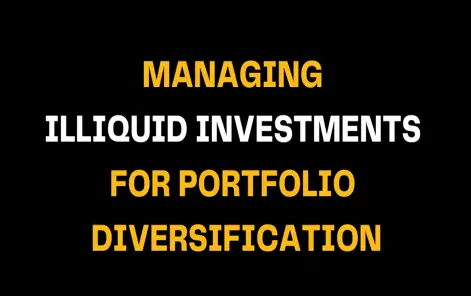
Managing Illiquid Investments for Portfolio Diversification

Black background with bold white and yellow text stating Managing Illiquid Investments for Portfolio Diversification, focusing on investment diversification using illiquid financial instruments.

Read Time3 MinsInvestors are often advised to maintain a balanced and diversified portfolio to mitigate risks and achieve their financial goals. A diversified portfolio typically includes both liquid and illiquid investments. While liquid investments are easily tradable, illiquid investments can be challenging to sell or liquidate, and their value may fluctuate significantly over time. Therefore, […]

Read Time4 Mins

Investors are often advised to maintain a balanced and diversified portfolio to mitigate risks and achieve their financial goals. A diversified portfolio typically includes both liquid and illiquid investments. While liquid investments are easily tradable, illiquid investments can be challenging to sell or liquidate, and their value may fluctuate significantly over time. Therefore, it is essential to keep an eye on illiquid investments along with liquid investments to ensure that your portfolio is well diversified to achieve your financial objectives. 

What are Illiquid Investments? 

Illiquid investments are assets that cannot be easily converted into cash. These can include real estate, private equity, hedge funds, venture capital, and other alternative investments. Unlike liquid investments such as stocks and bonds, illiquid investments are not traded on public exchanges and may require significant time and effort to find a buyer or seller. 

Read more: Power of Portfolio Consolidation 

Why Keep an Eye on Illiquid Investments? 

Illiquid investments can offer many benefits to investors, such as higher potential returns, diversification, and reduced market volatility. However, they also pose several risks, including liquidity risk, valuation risk, and regulatory risk. Therefore, it is essential to keep an eye on illiquid investments to mitigate these risks and ensure that your portfolio remains aligned with your financial goals and risk tolerance. 

1.Liquidity Risk 

Liquidity risk is the risk that an investor cannot sell or liquidate an asset quickly or at a fair price. Illiquid Investment Portfolio Management, such as real estate, private equity, and hedge funds, are particularly vulnerable to liquidity risk, as they may have long holding periods and limited markets. Therefore, it is crucial to monitor the liquidity of these investments regularly and ensure that they are not overrepresented in your portfolio. 

2.Valuation Risk 

Valuation risk is the risk that the value of an asset may be mispriced or difficult to determine. Illiquid investments, such as real estate and private equity, are often valued based on appraisals or estimates, which can be subjective and subject to error. Therefore, it is essential to review the valuation methodology of illiquid investments regularly and ensure that they are consistent with industry standards. 

3.Regulatory Risk 

Regulatory risk is the risk that regulatory changes may impact the value or liquidity of an investment. Illiquid investments, such as hedge funds and private equity, are subject to fewer regulatory requirements than public securities. However, regulatory changes can still impact on these investments, and it is essential to monitor regulatory developments and ensure that your investments comply with applicable laws and regulations. 

How to Keep an Eye on Illiquid Investments? 

To keep an eye on illiquid investments effectively, investors should take the following steps: 

1.Regular monitoring 

Investors should monitor their illiquid investments regularly to ensure that they remain aligned with their financial goals and risk tolerance. This includes reviewing the investment strategy, performance, fees, and risks regularly and communicating with the investment manager to stay informed of any changes. 

2.Diversification 

Investors should ensure that their illiquid investments are well-diversified and not overrepresented in their portfolio. This can help mitigate liquidity risk and valuation risk and ensure that the portfolio remains well positioned to achieve their financial Management Software goals. 

3.Professional advice 

Investors should seek professional advice from a financial advisor or investment manager who has experience in managing illiquid investments. An experienced professional can help investors navigate the risks and opportunities of illiquid investments and ensure that they are making informed investment decisions. 

In conclusion, keeping an eye on illiquid investments along with liquid investments is crucial for maintaining a balanced and diversified portfolio and achieving your financial goals. Illiquid investments offer many benefits to investors. 
Leave a Reply

Your email address will not be published. Required fields are marked *

minimum investment for hedge fund

Minimum Investment For Hedge Fund: Why One Hedge Fund Asks for $100K, and Another Wants $5M

Hedge Fund Minimum Investment Levels Usually Start Around $100,000 and Rise From There There is no single market-wide floor. The baseline minimum investment for hedge fund access often starts at…
what is the difference between estate planning and a will

Estate Planning vs. a Will: the Difference That Trips People Up

Why a Will Is One Part of an Estate Plan, Not the Alternative to It People often use a will as shorthand for the whole estate-planning conversation. That everyday label…
Hedge Fund Vs Investment Management

Hedge Fund vs Investment Management: Structure, Access, Fees

Are You Comparing Investment Structures or Finance Career Paths? The query mixes two different comparisons. One asks about investment structures, meaning how capital is organized, managed, and offered to investors.…
high net worth individuals investment strategies

Investment Strategies for High-Net-Worth Individuals

Who These Strategies Fit and Why High Net Worth Individuals Invest Differently More wealth does not just widen the product shelf. It changes the portfolio’s operating constraints. For high net…
portfolio reporting

Why Most Portfolio Reporting Fail the People Using Them

The Different Types of Portfolio Reporting and Why the Distinction Matters First Most portfolio reporting fails before the first chart appears because the term itself is treated as a single,…
great wealth transfer

The Great Wealth Transfer Is Here, but Who Actually Benefits?

Who Actually Benefits When Inherited Wealth Is Already Concentrated The headline number is large, but the benefits are not broad. Cerulli’s estimates show why: its 2022 projection put $84.4 trillion…
minimum investment for hedge fund

Minimum Investment For Hedge Fund: Why One Hedge Fund Asks for $100K, and Another Wants $5M

Hedge Fund Minimum Investment Levels Usually Start Around $100,000 and Rise From There There is no single market-wide floor. The baseline minimum investment for hedge fund access often starts at…
what is the difference between estate planning and a will

Estate Planning vs. a Will: the Difference That Trips People Up

Why a Will Is One Part of an Estate Plan, Not the Alternative to It People often use a will as shorthand for the whole estate-planning conversation. That everyday label…
Hedge Fund Vs Investment Management

Hedge Fund vs Investment Management: Structure, Access, Fees

Are You Comparing Investment Structures or Finance Career Paths? The query mixes two different comparisons. One asks about investment structures, meaning how capital is organized, managed, and offered to investors.…
high net worth individuals investment strategies

Investment Strategies for High-Net-Worth Individuals

Who These Strategies Fit and Why High Net Worth Individuals Invest Differently More wealth does not just widen the product shelf. It changes the portfolio’s operating constraints. For high net…
portfolio reporting

Why Most Portfolio Reporting Fail the People Using Them

The Different Types of Portfolio Reporting and Why the Distinction Matters First Most portfolio reporting fails before the first chart appears because the term itself is treated as a single,…
great wealth transfer

The Great Wealth Transfer Is Here, but Who Actually Benefits?

Who Actually Benefits When Inherited Wealth Is Already Concentrated The headline number is large, but the benefits are not broad. Cerulli’s estimates show why: its 2022 projection put $84.4 trillion…